In July 2026, China crossed a symbolic threshold: its installed solar capacity now exceeds that of its coal power fleet. The world's largest CO₂ emitter in the power sector seems to be turning a corner. Behind the symbol, the reality is more nuanced.
A solar race like no other
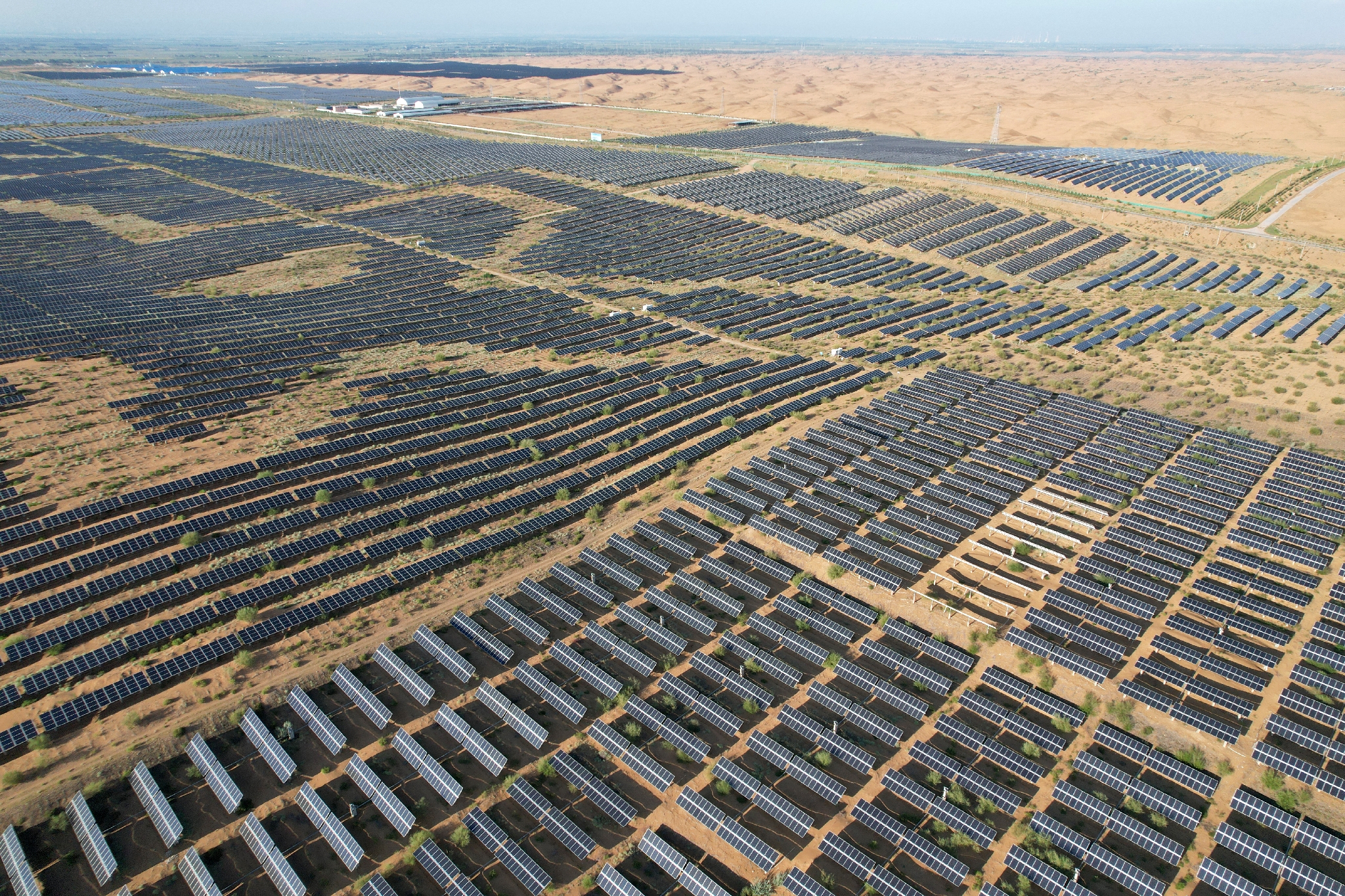
China is building solar panels at a pace no other country comes close to. In 2023, it installed between 180 and 230 GW of solar capacity, three to four times the capacity added by all European countries combined that same year (Euronews).
Three years later, the tipping point has been reached. In July 2026, the country totals 1,286 GW of solar, versus 1,285 GW of coal (NEA). On paper, the sun now weighs as much as coal in China's power fleet.
Installed capacity that doesn't show up in production
This apparent parity hides a fundamental difference. Installed capacity is what a piece of equipment can produce at maximum, under ideal conditions. Yet a solar panel almost never reaches its nameplate power: it produces nothing at night, and less in winter or under cloud cover. A coal plant, on the other hand, can run day and night, all year round. This is called the load factor, and it clearly favors coal.
So, however frenzied the pace of photovoltaic installations, it is not matched by production. Over the first seven months of 2026, solar supplied only about one eighth of Chinese electricity, versus 54% for coal.
The gap shows directly in the carbon footprint. A kWh produced in China emits 472 g of CO₂ on average (Low Carbon Power), versus 19.6 g for a French kWh (Connaissance des Énergies), whose mix relies largely on nuclear and hydro.
Curtailment, or clean energy wasted
The problem doesn't stop there. When sunshine is favorable and solar output soars, the Chinese grid cannot absorb the surplus. Part of the clean energy produced is then lost.
Concretely, when the grid cannot carry the electricity produced, operators switch off part of the solar and wind farms. This is called curtailment.
In China, the scale of the phenomenon is considerable. In six months, 26% of wind and solar output was lost, or 360 TWh. For comparison, that volume is almost all of France's 2025 nuclear production, at 373 TWh (Connaissance des Énergies).
The grid, the real bottleneck of the transition
The lesson goes well beyond the Chinese case: installed renewable capacity is not everything. The decisive factor is the ability of transmission and distribution grids to keep pace with new connections.
A resilient power system is measured by its ability to absorb peaks, whether they come from production or consumption. This requires lines sized to carry electricity where it is produced, and levers to store surpluses or shed shortfalls.
This is where Orus Energy comes in. By modulating the equipment of commercial buildings, we bring flexibility where the grid lacks it.